<!DOCTYPE html>
    <html lang="vi" xmlns="http://www.w3.org/1999/xhtml" prefix="og: http://ogp.me/ns#">
    <head>
<title>AI vì lợi ích công cộng&#x3A; Nguồn Mở là chưa đủ</title>
<meta name="description" content="AI vì lợi ích công cộng&#x3A; Nguồn Mở là chưa đủ - Savefile - Blogs - https&#x3A;&#x002F;&#x002F;letrungnghia.mangvn.org&#x002F;savefile&#x002F;Author&#x002F;ai-vi-loi-ich-cong-cong-nguon-mo-la-chua-du-8051.html">
<meta name="author" content="Blog FOSS by Lê Trung Nghĩa">
<meta name="copyright" content="Blog FOSS by Lê Trung Nghĩa [webmaster@vinades.vn]">
<meta name="generator" content="NukeViet v4.6">
<meta http-equiv="Content-Type" content="text/html; charset=utf-8">
<meta property="og:title" content="AI vì lợi ích công cộng&#x3A; Nguồn Mở là chưa đủ">
<meta property="og:type" content="website">
<meta property="og:description" content="Savefile - Blogs - https&#x3A;&#x002F;&#x002F;letrungnghia.mangvn.org&#x002F;savefile&#x002F;Author&#x002F;ai-vi-loi-ich-cong-cong-nguon-mo-la-chua-du-8051.html">
<meta property="og:site_name" content="Blog FOSS by Lê Trung Nghĩa">
<meta property="og:url" content="https://letrungnghia.mangvn.org/savefile/Author/ai-vi-loi-ich-cong-cong-nguon-mo-la-chua-du-8051.html">
<link rel="shortcut icon" href="https://letrungnghia.mangvn.org/favicon.ico">
<link rel="canonical" href="https://letrungnghia.mangvn.org/savefile/Author/ai-vi-loi-ich-cong-cong-nguon-mo-la-chua-du-8051.html">
<link rel="alternate" href="https://letrungnghia.mangvn.org/rss/" title="Blogs" type="application/rss+xml">
<link rel="alternate" href="https://letrungnghia.mangvn.org/rss/Government/" title="Blogs - Government" type="application/rss+xml">
<link rel="alternate" href="https://letrungnghia.mangvn.org/rss/Policy/" title="Blogs - Policy" type="application/rss+xml">
<link rel="alternate" href="https://letrungnghia.mangvn.org/rss/Philosophy/" title="Blogs - Philosophy" type="application/rss+xml">
<link rel="alternate" href="https://letrungnghia.mangvn.org/rss/Security/" title="Blogs - Security" type="application/rss+xml">
<link rel="alternate" href="https://letrungnghia.mangvn.org/rss/Legal/" title="Blogs - Legal" type="application/rss+xml">
<link rel="alternate" href="https://letrungnghia.mangvn.org/rss/Education/" title="Blogs - Education" type="application/rss+xml">
<link rel="alternate" href="https://letrungnghia.mangvn.org/rss/Business/" title="Blogs - Business" type="application/rss+xml">
<link rel="alternate" href="https://letrungnghia.mangvn.org/rss/Community/" title="Blogs - Community" type="application/rss+xml">
<link rel="alternate" href="https://letrungnghia.mangvn.org/rss/Interoperability/" title="Blogs - Interoperability" type="application/rss+xml">
<link rel="alternate" href="https://letrungnghia.mangvn.org/rss/Standards/" title="Blogs - Standards" type="application/rss+xml">
<link rel="alternate" href="https://letrungnghia.mangvn.org/rss/Author/" title="Blogs - Author" type="application/rss+xml">
<link rel="alternate" href="https://letrungnghia.mangvn.org/rss/Opinions/" title="Blogs - Opinions" type="application/rss+xml">
<link rel="alternate" href="https://letrungnghia.mangvn.org/rss/CC/" title="Blogs - CC" type="application/rss+xml">
<link rel="alternate" href="https://letrungnghia.mangvn.org/rss/Cloud/" title="Blogs - Cloud" type="application/rss+xml">
<link rel="alternate" href="https://letrungnghia.mangvn.org/rss/Hardware/" title="Blogs - Hardware" type="application/rss+xml">
<link rel="alternate" href="https://letrungnghia.mangvn.org/rss/Software/" title="Blogs - Software" type="application/rss+xml">
<link rel="alternate" href="https://letrungnghia.mangvn.org/rss/Statistics/" title="Blogs - Statistics" type="application/rss+xml">
<link rel="alternate" href="https://letrungnghia.mangvn.org/rss/Trends/" title="Blogs - Trends" type="application/rss+xml">
<link rel="alternate" href="https://letrungnghia.mangvn.org/rss/China/" title="Blogs - China" type="application/rss+xml">
<link rel="alternate" href="https://letrungnghia.mangvn.org/rss/OSs/" title="Blogs - OSs" type="application/rss+xml">
<link rel="alternate" href="https://letrungnghia.mangvn.org/rss/Blogs/" title="Blogs - Blogs" type="application/rss+xml">
<link rel="alternate" href="https://letrungnghia.mangvn.org/rss/Outsourcing/" title="Blogs - Outsourcing" type="application/rss+xml">
<link rel="alternate" href="https://letrungnghia.mangvn.org/rss/elearning/" title="Blogs - Elearning" type="application/rss+xml">
<link rel="preload" as="style" href="https://letrungnghia.mangvn.org/assets/css/font-awesome.min.css" type="text/css">
<link rel="preload" as="style" href="https://letrungnghia.mangvn.org/themes/default/css/bootstrap.non-responsive.css" type="text/css">
<link rel="preload" as="style" href="https://letrungnghia.mangvn.org/themes/default/css/style.css" type="text/css">
<link rel="preload" as="style" href="https://letrungnghia.mangvn.org/themes/default/css/style.non-responsive.css" type="text/css">
<link rel="preload" as="style" href="https://letrungnghia.mangvn.org/themes/default/css/news.css" type="text/css">
<link rel="preload" as="style" href="https://letrungnghia.mangvn.org/themes/default/css/custom.css" type="text/css">
<link rel="preload" as="style" href="https://letrungnghia.mangvn.org/assets/css/default.vi.1106.css" type="text/css">
<link rel="preload" as="script" href="https://letrungnghia.mangvn.org/assets/js/jquery/jquery.min.js" type="text/javascript">
<link rel="preload" as="script" href="https://letrungnghia.mangvn.org/assets/js/language/vi.js" type="text/javascript">
<link rel="preload" as="script" href="https://letrungnghia.mangvn.org/assets/js/DOMPurify/purify3.js" type="text/javascript">
<link rel="preload" as="script" href="https://letrungnghia.mangvn.org/assets/js/global.js" type="text/javascript">
<link rel="preload" as="script" href="https://letrungnghia.mangvn.org/assets/js/site.js" type="text/javascript">
<link rel="preload" as="script" href="https://letrungnghia.mangvn.org/themes/default/js/news.js" type="text/javascript">
<link rel="preload" as="script" href="https://letrungnghia.mangvn.org/themes/default/js/main.js" type="text/javascript">
<link rel="preload" as="script" href="https://letrungnghia.mangvn.org/themes/default/js/custom.js" type="text/javascript">
<link rel="preload" as="script" href="https://letrungnghia.mangvn.org/themes/default/js/bootstrap.min.js" type="text/javascript">
<link rel="stylesheet" href="https://letrungnghia.mangvn.org/assets/css/font-awesome.min.css">
<link rel="stylesheet" href="https://letrungnghia.mangvn.org/themes/default/css/bootstrap.non-responsive.css">
<link rel="stylesheet" href="https://letrungnghia.mangvn.org/themes/default/css/style.css">
<link rel="stylesheet" href="https://letrungnghia.mangvn.org/themes/default/css/style.non-responsive.css">
<link rel="StyleSheet" href="https://letrungnghia.mangvn.org/themes/default/css/news.css">
<link rel="stylesheet" href="https://letrungnghia.mangvn.org/themes/default/css/custom.css">
<link rel="stylesheet" href="https://letrungnghia.mangvn.org/assets/css/default.vi.1106.css">
<style type="text/css">
	body{background: #fff;}
</style>
<script>(function(i,s,o,g,r,a,m){i['GoogleAnalyticsObject']=r;i[r]=i[r]||function(){
(i[r].q=i[r].q||[]).push(arguments)},i[r].l=1*new Date();a=s.createElement(o),
m=s.getElementsByTagName(o)[0];a.async=1;a.src=g;m.parentNode.insertBefore(a,m)
})(window,document,'script','https://www.google-analytics.com/analytics.js','ga');
ga('create', 'UA-70254229-3', '');
ga('send', 'pageview');
</script>
</head>
    <body>
<div id="print">
	<div id="hd_print">
		<h2 class="pull-left">Blog FOSS by Lê Trung Nghĩa</h2>
		<p class="pull-right"><a title="Blog FOSS by Lê Trung Nghĩa" href="https://letrungnghia.mangvn.org/">https://letrungnghia.mangvn.org</a></p>
	</div>
	<div class="clear"></div>
	<hr />
	<div id="content">
		<h1>AI vì lợi ích công cộng&#x3A; Nguồn Mở là chưa đủ</h1>
		<ul class="list-inline">
			<li>Thứ hai - 02/11/2026 06:25</li>
			<li class="hidden-print txtrequired"><em class="fa fa-print">&nbsp;</em><a title="In ra" href="javascript:;" onclick="window.print()">In ra</a></li>
			<li class="hidden-print txtrequired"><em class="fa fa-power-off">&nbsp;</em><a title="Đóng cửa sổ này" href="javascript:;" onclick="window.close()">Đóng cửa sổ này</a></li>
		</ul>
		<div class="clear"></div>
		<div id="hometext">
		</div>
				<div class="imghome">
			<img alt="AI vì lợi ích công cộng&#x3A; Nguồn Mở là chưa đủ" src="https://letrungnghia.mangvn.org/uploads/letrungnghia/news/2026/ai-for-public-good-open-source-is-not-enough.png" width="460" class="img-thumbnail" />
		</div>
		<div class="clear"></div>
		<div id="bodytext" class="clearfix">
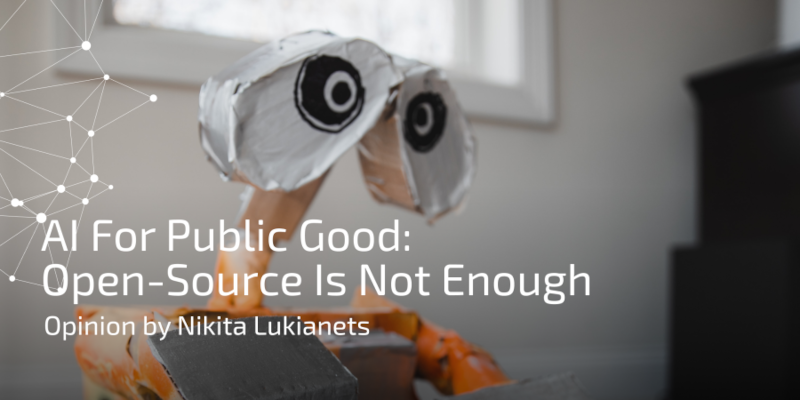
			<p style="text-align:justify;"><span style="background-color:#ffff00;"><span style=""><strong>AI For Public Good: Open-Source Is Not Enough</strong></span></span></p><p style="text-align:justify;">Nikita Lukianets, 26 April 2021 - updated 1 year ago</p><p style="text-align:justify;">Theo: <a target="_blank" rel="noopener noreferrer" href="https://futurium.ec.europa.eu/en/european-ai-alliance/community-content/ai-public-good-open-source-not-enough">https://futurium.ec.europa.eu/en/european-ai-alliance/community-content/ai-public-good-open-source-not-enough</a></p><p style="text-align:justify;">Bài được đưa lên Internet ngày: 26/04/2021, được cập nhật 1 năm trước</p><p style="text-align:justify;">Những câu chuyện về các công ty đầu tư mạnh mẽ vào các chương trình trách nhiệm của xã hội và doanh nghiệp - CSR (Corporate Social Responsibility) không còn là điều mới mẻ. Các công ty công nghệ cũng không phải là ngoại lệ; họ nỗ lực khơi dậy tinh thần cống hiến vì cộng đồng của nhân viên, đóng góp cho cộng đồng và xây dựng lòng tin với khách hàng. Nguồn Mở (Open Source) đã trở thành một phần quan trọng trong chiến lược CSR và <a target="_blank" rel="noopener noreferrer" href="https://ovio.org/">hơn thế nữa</a>. <span style="color:#c9211e;">Trong khi một số công ty quảng bá các hoạt động nguồn mở để tạo dựng niềm tin nơi người dùng, thì những công ty khác lại xây dựng toàn bộ quy trình nghiên cứu và phát triển (R&amp;D) cũng như chiến lược sản phẩm hoàn toàn dựa trên nền tảng nguồn mở</span>. Tại sao lại như vậy? Lợi ích của việc áp dụng nguồn mở là gì? Những rủi ro tiềm ẩn ra sao và tất cả những điều này có liên quan gì đến trí tuệ nhân tạo (AI)?&nbsp;</p><p style="text-align:justify;">Vậy, chính xác thì nguồn mở là gì? Phần mềm nguồn mở - OSS (Open Source Software) là <span style="color:#c9211e;">loại phần mềm có mã nguồn được mở công khai</span> và <a target="_blank" rel="noopener noreferrer" href="https://opensource.org/licenses">được cấp phép</a> <span style="color:#c9211e;">theo cách cho phép bất kỳ ai cũng có thể nghiên cứu, sửa đổi và phân phối phần mềm đó cho người khác với bất kỳ mục đích nào</span>. <span style="color:#c9211e;">Nguyên tắc cốt lõi của OSS là sự hợp tác cộng đồng trong việc tạo ra mã nguồn, bản thiết kế và tài liệu kỹ thuật một cách mở công khai</span>.&nbsp;</p><p style="text-align:justify;">Khái niệm chia sẻ miễn phí các đổi mới công nghệ đã tồn tại từ rất lâu trước khi máy tính ra đời; ví dụ điển hình là việc chia sẻ tri thức khoa học trên tạp chí <a target="_blank" rel="noopener noreferrer" href="https://royalsocietypublishing.org/journal/rstl"><i>Philosophical Transactions</i></a> hay các thỏa thuận cấp phép chéo trong giai đoạn đầu của ngành công nghiệp ô tô – điều được mô tả chi tiết trong cuốn <a target="_blank" rel="noopener noreferrer" href="https://www.amazon.com/Car-Culture-James-J-Flink/dp/0262560151"><i>The Car Culture</i></a> của James Flink.&nbsp;</p><p style="text-align:justify;"><span style="color:#c9211e;">Trong thời kỳ đầu của ngành máy tính, phần mềm chủ yếu được các nhà nghiên cứu làm việc trên tinh thần hợp tác tạo ra</span>. Tuy nhiên, sau khi Ủy ban Hoa Kỳ về Sử dụng Công nghệ Mới đối với các Tác phẩm có Bản quyền (CONTU) <a target="_blank" rel="noopener noreferrer" href="https://tech-insider.org/intellectual-property/research/acrobat/780731.pdf">quyết định</a> rằng phần mềm có thể được bảo hộ bản quyền, các nhà cung cấp máy tính và công ty phần mềm bắt đầu thu phí cấp phép. <span style="color:#c9211e;">Đối với những đơn vị nắm giữ nguồn lực và quyền sở hữu trí tuệ (IP), việc bán giấy phép sử dụng mã nguồn độc quyền hứa hẹn mang lại lợi nhuận khổng lồ</span>. <span style="color:#c9211e;">Phong trào phần mềm tự do</span> (<a target="_blank" rel="noopener noreferrer" href="https://www.fsf.org/">free software movement</a>) <span style="color:#c9211e;">ra đời phần lớn nhằm mục đích đối trọng lại xu hướng tư hữu hóa phần mềm này</span>.&nbsp;</p><p style="text-align:justify;"><strong>Crowdsourced reliability and security</strong></p><p style="text-align:justify;">Lợi ích thường được nhắc đến nhiều nhất của phần mềm nguồn mở chính là chi phí. Thoạt nhìn, nguồn mở dường như là một miền đất hứa đầy hấp dẫn. Người dùng có thể sử dụng và phát triển các ứng dụng mới dựa trên nền tảng mã nguồn có sẵn hoàn toàn miễn phí mà không cần phải trả thêm bất kỳ khoản phí cấp phép nào. <span style="color:#c9211e;">Tất nhiên, chi phí mua giấy phép chỉ là một phần trong tổng chi phí; tuy nhiên, hãy cùng xem xét các khía cạnh khác của mô hình nguồn mở để hiểu điều gì khiến nó trở nên hấp dẫn đối với cộng đồng doanh nghiệp cũng như các ứng dụng AI phục vụ lợi ích công cộng</span>.</p><p style="text-align:justify;">3 lợi ích hàng đầu của mã nguồn mở bao gồm:</p><ol><li data-list-item-id="e7312f02d4e0e3977054e3d94ddcc03f3"><p style="text-align:justify;">Độ tin cậy và tính bảo mật nhờ sức mạnh cộng đồng</p></li><li data-list-item-id="e3bea6a882b29aa0a9520be1c863a8027"><p style="text-align:justify;">Sự tự do và linh hoạt</p></li><li data-list-item-id="e1000368a28626788ca5fc9f7d1109ce4"><p style="text-align:justify;">Đổi mới sáng tạo mở</p></li></ol><p style="text-align:justify;"><strong>Độ tin cậy và tính bảo mật nhờ sức mạnh cộng đồng</strong></p><p style="text-align:justify;"><span style="color:#c9211e;">Việc chia sẻ khơi dậy sự xuất sắc trong quá trình phát triển</span>. Khi biết rằng các đồng nghiệp sẽ xem xét công việc của mình, bạn sẽ nỗ lực hết mình. Bảo mật phần mềm nguồn mở là mối quan tâm của nhiều người; tuy nhiên, <span style="color:#c9211e;">thực tế đã chứng minh rằng khi mã nguồn của dự án được mở công khai, sẽ có nhiều cơ hội hơn để các chuyên gia bảo mật (ethical hackers) rà soát và tăng cường tính bảo mật cho mã nguồn đó</span>. Nhờ vậy, việc bắt đầu với các thành phần chất lượng cao khi phát triển thuật toán AI sẽ mang lại cơ hội lớn hơn để tạo ra các sản phẩm AI ưu việt.</p><p style="text-align:justify;"><strong>Sự tự do và linh hoạt</strong></p><p style="text-align:justify;"><span style="color:#c9211e;">Cách tiếp cận mã nguồn mở cho phép xây dựng và tùy chỉnh các thuật toán AI ngay từ nền tảng cơ bản</span>. Điều này có nghĩa là nhiều nhà cung cấp phần mềm có thể cùng tham gia phát triển sản phẩm khi cần thiết. Trái ngược với nguồn mở, các sản phẩm dựa trên mã nguồn độc quyền (proprietary code) thường không mang lại sự linh hoạt như vậy, đồng thời có thể dẫn đến tình trạng tắc nghẽn trong quá trình phát triển và làm tăng chi phí.</p><p style="text-align:justify;"><strong>Đổi mới sáng tạo mở</strong></p><p style="text-align:justify;">Khi mọi người làm việc với các thuật toán AI vì động lực tự thân (chứ không chỉ vì thù lao), họ sẽ có quyết tâm cao hơn nhiều trong việc đóng góp những ý tưởng xuất sắc nhất. Chính động lực này thường truyền cảm hứng cho các cộng đồng tình nguyện phát triển những tính năng mang tính đột phá với tốc độ nhanh đến mức khó có thể hình dung đối với các nhà cung cấp thương mại truyền thống.</p><p style="text-align:justify;">Các phương thức huy động sức mạnh cộng đồng (crowdsourcing) được biết đến với khả năng thúc đẩy đổi mới sáng tạo trong các ngành công nghiệp đòi hỏi nhiều nguồn lực và có tính cạnh tranh cao, bao gồm cả các lĩnh vực ứng dụng AI. Vậy, đâu là những rủi ro và liệu nguồn mở có phải là giải pháp &quot;đủ&quot; hay không?</p><p style="text-align:justify;">Trước hết, cần lưu ý rằng các sản phẩm AI phát triển theo mô hình nguồn mở cũng tiềm ẩn những rủi ro tương tự như bất kỳ sản phẩm nguồn mở nào khác: (1) Các sản phẩm nguồn mở dễ bị kẻ xấu tấn công vì quyền truy cập vào cơ sở mã nguồn cũng đồng nghĩa với việc có thể khai thác các lỗ hổng bảo mật của sản phẩm; (2) Trải nghiệm người dùng (UX): dù không phải tất cả phần mềm nguồn mở đều như vậy, nhưng một số giải pháp có thể không thân thiện với người dùng bằng các sản phẩm thương mại tương ứng; (3) Do nguồn mở thường được nhiều cá nhân đóng góp phát triển, trách nhiệm cũng bị phân tán, khiến việc quy trách nhiệm cụ thể trở nên khá khó khăn.</p><p style="text-align:justify;">Thứ hai, thành phần mã nguồn chỉ là một yếu tố cấu thành sản phẩm. Ngày nay, <a target="_blank" rel="noopener noreferrer" href="https://sourceforge.net/directory/science-engineering/ai/">nhiều</a> thuật toán AI và mã nguồn triển khai của chúng đã được mở công khai, thậm chí cho phép sử dụng miễn phí. <span style="color:#c9211e;">Tuy nhiên, mã nguồn không phải là yếu tố duy nhất định hình nên sản phẩm AI</span>. <span style="color:#c9211e;">Nếu muốn sao chép một sản phẩm AI dựa trên thuật toán nguồn mở của nó, người khác sẽ không thể thực hiện được nếu thiếu năng lực tính toán khổng lồ và các bộ dữ liệu cần thiết để huấn luyện mô hình AI</span>. <span style="color:#c9211e;">Trong trường hợp này, việc chỉ công khai mã nguồn không nhất thiết giải quyết được sự chênh lệch giữa những bên sở hữu dữ liệu và tài nguyên tính toán với những bên không có các nguồn lực này</span>.</p><p style="text-align:justify;">Nguồn Mở là một văn hóa tuyệt vời, nhưng liệu nó có vô nghĩa đối với các sản phẩm dựa trên AI? Câu trả lời là không. Nó cần một định nghĩa mới. Để nền kinh tế phát triển thịnh vượng và mang lại lợi ích cho những nhóm người yếu thế, chúng ta cần định nghĩa lại khái niệm Nguồn Mở cho phù hợp với thế giới do AI vận hành. Trong thế giới này, việc công khai <a target="_blank" rel="noopener noreferrer" href="https://www.microsoft.com/en-us/research/project/datasheets-for-datasets/">tài liệu</a> về các quy trình thực hành sẽ mang lại lợi ích to lớn cho cả nhà phát triển lẫn người tiêu dùng. Cộng đồng nhà phát triển có thể sử dụng và tái sử dụng các kiến ​​thức chung, qua đó &quot;đứng trên vai những người khổng lồ&quot;. Còn cộng đồng người tiêu dùng—theo các chuẩn mực tốt nhất từ ​​những ngành công nghiệp khác—<a target="_blank" rel="noopener noreferrer" href="https://openethics.ai/label/">cần được tiếp cận</a> thông tin về cách thức xây dựng các hệ thống này cũng như cách các quyết định tự động được đưa ra. <span style="color:#c9211e;">Truy cập mở. Dữ liệu mở. Nguồn Mở. Đạo đức mở</span>.</p><p style="text-align:justify;">Hình ảnh được lấy từ <a target="_blank" rel="noopener noreferrer" href="https://unsplash.com/@apollo_y?utm_source=unsplash&amp;utm_medium=referral&amp;utm_content=creditCopyText">MORAN</a> trên <a target="_blank" rel="noopener noreferrer" href="https://unsplash.com/s/photos/robots?utm_source=unsplash&amp;utm_medium=referral&amp;utm_content=creditCopyText">Unsplash</a>.</p><p style="text-align:justify;"><span style="background-color:#ffff00;"><span style="">The stories about companies strongly investing in corporate and social responsibility programs are not something new. Tech companies are no exception here, they strive to embrace the altruistic potential of their employees, contribute to the community, and build trust with their customer base. Open-source has become a big part of Corporate Social Responsibility and </span></span><a target="_blank" rel="noopener noreferrer" href="https://ovio.org/"><span style="background-color:#ffff00;"><span style="">beyond</span></span></a><span style="background-color:#ffff00;"><span style="">. While some companies are marketing their open-source activity to build trust with users, others are centering their R&amp;D processes and product strategy around open-source entirely. Why is that so? What are the benefits of going open-source? What are the risks, and what this all has to do with AI?</span></span></p><p style="text-align:justify;"><span style="background-color:#ffff00;"><span style="">Well, what exactly is open-source? Open-source software (OSS) is a category of software in which source code is open to the public and is&nbsp;</span></span><a target="_blank" rel="noopener noreferrer" href="https://opensource.org/licenses"><span style="background-color:#ffff00;"><span style="">licensed</span></span></a><span style="background-color:#ffff00;"><span style="">&nbsp;in a way that allows everyone to study, change, and distribute the software to anyone and for any purpose. The main principle of OSS is peer production of source code, blueprints, and documentation which is done openly in public.</span></span></p><p style="text-align:justify;"><span style="background-color:#ffff00;"><span style="">The concept of free sharing of technological innovation existed long before computers, the examples are scientific sharing in&nbsp;</span></span><a target="_blank" rel="noopener noreferrer" href="https://royalsocietypublishing.org/journal/rstl"><span style="background-color:#ffff00;"><span style="">Philosophical Transactions</span></span></a><span style="background-color:#ffff00;"><span style="">,&nbsp;or even the cross-licensing agreements of the early automotive industry, as greatly described in&nbsp;</span></span><a target="_blank" rel="noopener noreferrer" href="https://www.amazon.com/Car-Culture-James-J-Flink/dp/0262560151"><span style="background-color:#ffff00;"><span style="">The Car Culture</span></span></a><span style="background-color:#ffff00;"><span style="">&nbsp;book by James Flink.</span></span></p><p style="text-align:justify;"><span style="background-color:#ffff00;"><span style="">In the early era of computing, most of the software was produced by researchers working in collaboration. Once US Commission on New Technological Uses of Copyrighted Works&nbsp;</span></span><a target="_blank" rel="noopener noreferrer" href="https://tech-insider.org/intellectual-property/research/acrobat/780731.pdf"><span style="background-color:#ffff00;"><span style="">decided</span></span></a><span style="background-color:#ffff00;"><span style="">&nbsp;that software should become copyrightable, computer vendors and software companies began charging for licenses. For those who owned resources and IP, selling licenses to use their proprietary source code promised big returns. The foundation of the&nbsp;</span></span><a target="_blank" rel="noopener noreferrer" href="https://www.fsf.org/"><span style="background-color:#ffff00;"><span style="">free software movement</span></span></a><span style="background-color:#ffff00;"><span style="">&nbsp;was largely driven to counter this proprietization trend.</span></span></p><p style="text-align:justify;"><span style="background-color:#ffff00;"><span style="">The most commonly mentioned benefit of open-source software is cost. From the first glance, it may seem that open-source is a land flowing with milk and honey. One can use and build on top of the existing codebase for free, not being required to pay for any additional license. Of course, paying for a license is only part of the total cost, but let’s look at the other features of the open-source model to understand what makes it so interesting for the business community and public good AI applications.</span></span></p><p style="text-align:justify;"><span style="background-color:#ffff00;"><span style="">The top 3 benefits of open source are:</span></span></p><ol><li data-list-item-id="eba4669d02d1ee610a553aaf4da67ed54"><p style="margin-bottom:0cm;text-align:justify;"><span style="background-color:#ffff00;"><span style="">Crowdsourced reliability and security&nbsp;</span></span></p></li><li data-list-item-id="eda1dee5b38ae3a19ed9673c162c1cbe2"><p style="margin-bottom:0cm;text-align:justify;"><span style="background-color:#ffff00;"><span style="">Freedom and flexibility&nbsp;</span></span></p></li><li data-list-item-id="efc10c99ad179fb701de00dad9b613f9f"><p style="text-align:justify;"><span style="background-color:#ffff00;"><span style="">Open innovation&nbsp;</span></span></p></li></ol><p style="text-align:justify;"><span style="background-color:#ffff00;"><span style="">Sharing inspires excellence in development. If you know that your peers will be looking, you’ll do your best. Open-source software security is a concern for many; however, it’s proven that if the project’s code is made open, there will be more opportunities for ethical hackers to review that code and make it more secure. As a result, starting with high-quality components when it comes to the development of AI algorithms gives you a higher chance of producing better AI-driven products.</span></span></p><p style="text-align:justify;"><span style="background-color:#ffff00;"><span style=""><strong>Freedom and flexibility</strong></span></span></p><p style="text-align:justify;"><span style="background-color:#ffff00;"><span style="">Using an open-source approach allows the AI algorithms to be built and customized from the ground up. It means that multiple software vendors can participate in the product development if needed. Unlike open-source, products based on proprietary code won’t allow you such flexibility and may lead to development bottlenecks and increased fees.</span></span></p><p style="text-align:justify;"><span style="background-color:#ffff00;"><span style=""><strong>Open innovation</strong></span></span></p><p style="text-align:justify;"><span style="background-color:#ffff00;"><span style="">When you have people working on AI algorithms because they are intrinsically motivated to do so (not just because they’re getting paid), their personal drive to contribute with the best ideas is much higher. This drive is often what inspires volunteer communities to develop disruptive features and at a pace literally unimaginable to a commercial vendor.</span></span></p><p style="text-align:justify;"><span style="background-color:#ffff00;"><span style="">Crowdsourcing approaches are known to boost innovation in resource-intensive industries with high competition, including AI-driven verticals. Now, what are the risks, and is open-source “enough”?</span></span></p><p style="text-align:justify;"><span style="background-color:#ffff00;"><span style="">First, we need to remember that AI products based on the open-source development model carry the same set of risks as any open-source-based product: (1) Open-source products are vulnerable to malicious users because the privilege to access the codebase also gives the privilege to exploit the product’s vulnerabilities; (2) UX: not true for all open-source software, but some solutions might not be as user-friendly as their commercial counterparts; (3) Since open-source is typically developed by multiple contributors, responsibility is also scattered and it might be quite difficult to hold someone liable.</span></span></p><p style="text-align:justify;"><span style="background-color:#ffff00;"><span style="">Second, the code component is only one element of the product. Today </span></span><a target="_blank" rel="noopener noreferrer" href="https://sourceforge.net/directory/science-engineering/ai/"><span style="background-color:#ffff00;"><span style="">multiple</span></span></a><span style="background-color:#ffff00;"><span style=""> AI algorithms and their code implementations are already open and even free to use. However, it’s not the code alone that makes AI product what it is. If someone wants to replicate the AI product based on its open-sourced algorithm, they will not be able to without extensive computing power and the datasets to train the AI model. In this case, just open-sourcing code does not necessarily solve the asymmetry between those who possess datasets and computational resources, and those who don’t.&nbsp;&nbsp;</span></span></p><p style="text-align:justify;"><span style="background-color:#ffff00;"><span style="">Open-source is a beautiful culture, but is it futile for AI-driven products? No. It needs a new definition. For the economy to prosper and to bring benefits to the underprivileged, we need to make sure that the Open-source concept is redefined for the AI-driven world. In this world, we may benefit largely from openly </span></span><a target="_blank" rel="noopener noreferrer" href="https://www.microsoft.com/en-us/research/project/datasheets-for-datasets/"><span style="background-color:#ffff00;"><span style="">documenting</span></span></a><span style="background-color:#ffff00;"><span style=""> our practices both for the developers as well as for the consumers. The developer community can use and reuse the common knowledge and therefore “stand on the shoulders of giants.” The consumer community, following the best practices from other industries, should be&nbsp;</span></span><a target="_blank" rel="noopener noreferrer" href="https://openethics.ai/label/"><span style="background-color:#ffff00;"><span style="">able to access</span></span></a><span style="background-color:#ffff00;"><span style="">&nbsp;information about how these systems are built and how automated decisions are made. Open Access. Open Data. Open Source. Open Ethics.</span></span></p><p style="text-align:justify;"><span style="background-color:#ffff00;"><span style="">Picture adopted from&nbsp;</span></span><a target="_blank" rel="noopener noreferrer" href="https://unsplash.com/@apollo_y?utm_source=unsplash&amp;utm_medium=referral&amp;utm_content=creditCopyText"><span style="background-color:#ffff00;"><span style="">MORAN</span></span></a><span style="background-color:#ffff00;"><span style="">&nbsp;on&nbsp;</span></span><a target="_blank" rel="noopener noreferrer" href="https://unsplash.com/s/photos/robots?utm_source=unsplash&amp;utm_medium=referral&amp;utm_content=creditCopyText"><span style="background-color:#ffff00;"><span style="">Unsplash</span></span></a></p><p style="text-align:justify;">Dịch: Lê Trung Nghĩa</p><p style="text-align:justify;">letrungnghia.foss@gmail.com</p>
		</div>
				<div id="author">
						<p>
				<strong>Tác giả:</strong>
				<a href="https://letrungnghia.mangvn.org/author/Nghia-Le-Trung/">Nghĩa Lê Trung</a>
			</p>
		</div>
	</div>
	<div id="footer" class="clearfix">
		<div id="url">
			<strong>URL của bản tin này: </strong><a href="https://letrungnghia.mangvn.org/savefile/Author/ai-vi-loi-ich-cong-cong-nguon-mo-la-chua-du-8051.html" title="AI vì lợi ích công cộng&#x3A; Nguồn Mở là chưa đủ">https://letrungnghia.mangvn.org/savefile/Author/ai-vi-loi-ich-cong-cong-nguon-mo-la-chua-du-8051.html</a>

		</div>
		<div class="clear"></div>
		<div class="copyright">
			&copy; Blog FOSS by Lê Trung Nghĩa
		</div>
		<div id="contact">
			<a href="mailto:webmaster@vinades.vn">webmaster@vinades.vn</a>
		</div>
	</div>
</div>
        <div id="timeoutsess" class="chromeframe">
            Bạn đã không sử dụng Site, <a onclick="timeoutsesscancel();" href="https://letrungnghia.mangvn.org/#">Bấm vào đây để duy trì trạng thái đăng nhập</a>. Thời gian chờ: <span id="secField"> 60 </span> giây
        </div>
        <div id="openidResult" class="nv-alert" style="display:none"></div>
        <div id="openidBt" data-result="" data-redirect=""></div>
<div id="run_cronjobs" style="visibility:hidden;display:none;"><img alt="cron" src="/index.php?second=cronjobs&amp;p=s1udidQB" width="1" height="1" /></div>
<script src="https://letrungnghia.mangvn.org/assets/js/jquery/jquery.min.js"></script>
<script>var nv_base_siteurl="/",nv_lang_data="vi",nv_lang_interface="vi",nv_name_variable="nv",nv_fc_variable="op",nv_lang_variable="language",nv_module_name="news",nv_func_name="savefile",nv_is_user=0, nv_my_ofs=7,nv_my_abbr="+07",nv_cookie_prefix="nv4c_Cgoz2",nv_check_pass_mstime=1738000,nv_area_admin=0,nv_safemode=0,theme_responsive=0,nv_recaptcha_ver=2,nv_recaptcha_sitekey="6LcNwC8UAAAAAMm8ZTYNygweLUQtOU0IapbDRk69",nv_recaptcha_type="image",XSSsanitize=1;</script>
<script src="https://letrungnghia.mangvn.org/assets/js/language/vi.js"></script>
<script src="https://letrungnghia.mangvn.org/assets/js/DOMPurify/purify3.js"></script>
<script src="https://letrungnghia.mangvn.org/assets/js/global.js"></script>
<script src="https://letrungnghia.mangvn.org/assets/js/site.js"></script>
<script src="https://letrungnghia.mangvn.org/themes/default/js/news.js"></script>
<script src="https://letrungnghia.mangvn.org/themes/default/js/main.js"></script>
<script src="https://letrungnghia.mangvn.org/themes/default/js/custom.js"></script>
<script type="application/ld+json">
        {
            "@context": "https://schema.org",
            "@type": "Organization",
            "url": "https://letrungnghia.mangvn.org",
            "logo": "https://letrungnghia.mangvn.org/uploads/letrungnghia/le-trung-nghia.png"
        }
        </script>
<script src="https://letrungnghia.mangvn.org/themes/default/js/bootstrap.min.js"></script>
</body>
</html>